

Organize a company field day in 7 steps: form a planning committee, set goals, choose activities, build your schedule, and measure results. Full guide.
How to Organize Company Field Day: 7 Steps
Table of Contents
- Step 1: Form a Planning Committee and Delegate Responsibilities
- Step 2: Set Event Goals and Choose a Theme
- Step 3: Select Company Field Day Ideas That Fit Your Goals
- Step 4: Plan Inclusive Team Building Activities for Large Groups
- Step 5: Build Your Company Field Day Schedule
- Step 6: Handle Logistics, Safety, and Weather Contingencies
- Step 7: Measure Outcomes and Gather Feedback
- How to Organize Company Field Day: Common Mistakes to Avoid
- Frequently Asked Questions
Last Updated: October 18, 2026
Step 1: Form a Planning Committee and Delegate Responsibilities
The foundation of any successful company field day starts with the right team in place. You can’t organize a company field day alone, you need people who own different pieces of the puzzle.
Start by identifying 3-5 core team members. Choose people from different departments if possible. This spreads the workload and ensures diverse perspectives. Assign clear roles:
- Event lead: Overall coordination and timeline management
- Activities coordinator: Selecting games and team-building activities
- Logistics manager: Handling setup, equipment, and vendors
- Communications lead: Promoting the event and managing RSVPs
- Safety/wellness lead: Monitoring weather, accessibility, and participant wellbeing
Meet weekly in the weeks leading up to the event. Use a shared document to track decisions and deadlines. When people know their specific responsibility, things don’t slip through the cracks.
Pro TipStart recruiting your committee at least 8-10 weeks before your planned event date. Early planning prevents last-minute scrambling and gives vendors time to confirm availability.
Step 2: Set Event Goals and Choose a Theme
Before you pick a single activity or book a venue, define what success looks like. What do you actually want to achieve when you organize company field day?
Common goals include:
- Strengthen relationships between departments that don’t normally interact
- Boost employee morale and engagement
- Celebrate a company milestone or achievement
- Build trust and communication skills through collaboration
- Simply have fun and break up the routine
Your goals shape everything else, the activities you choose, the theme you pick, even the location. If your goal is cross-department connection, you’ll want mixed teams. If it’s celebrating a milestone, a themed approach works better.
A theme gives the day structure and energy. It doesn’t have to be complicated. Some examples:
- Classic Olympic-style competition with medal ceremonies
- Decades theme (1980s, 1990s, 2000s)
- “Around the World” with activities representing different countries
- Seasonal theme (Summer Games, Winter Wonderland, Fall Festival)
- Company-specific theme tied to your industry or brand values
The theme influences decorations, music, team names, and even snack choices. It creates a shared experience that people remember.
Step 3: Select Company Field Day Ideas That Fit Your Goals
Your company field day should include a mix of activities. Not everyone loves competitive sports, and not everyone wants to sit on the sidelines.
Consider these activity categories:
- Relay races (three-legged, egg-and-spoon, wheelbarrow)
- Tug-of-war
- Obstacle courses
- Kickball or softball
- Water balloon tosses (seasonal)
Low-impact games:
- Cornhole
- Giant Jenga or tumbling blocks
- Ring toss
- Bean bag games
- Ladder toss
Creative and skill-based:
- Scavenger hunts
- Trivia competitions
- Craft stations
- Karaoke or lip-sync battles
- Photo booth with props
Team-building challenges:
- Human knot (untangle without letting go of hands)
- Escape room-style puzzle challenges
- Trust falls and partner activities
- Minute-to-win-it style quick games
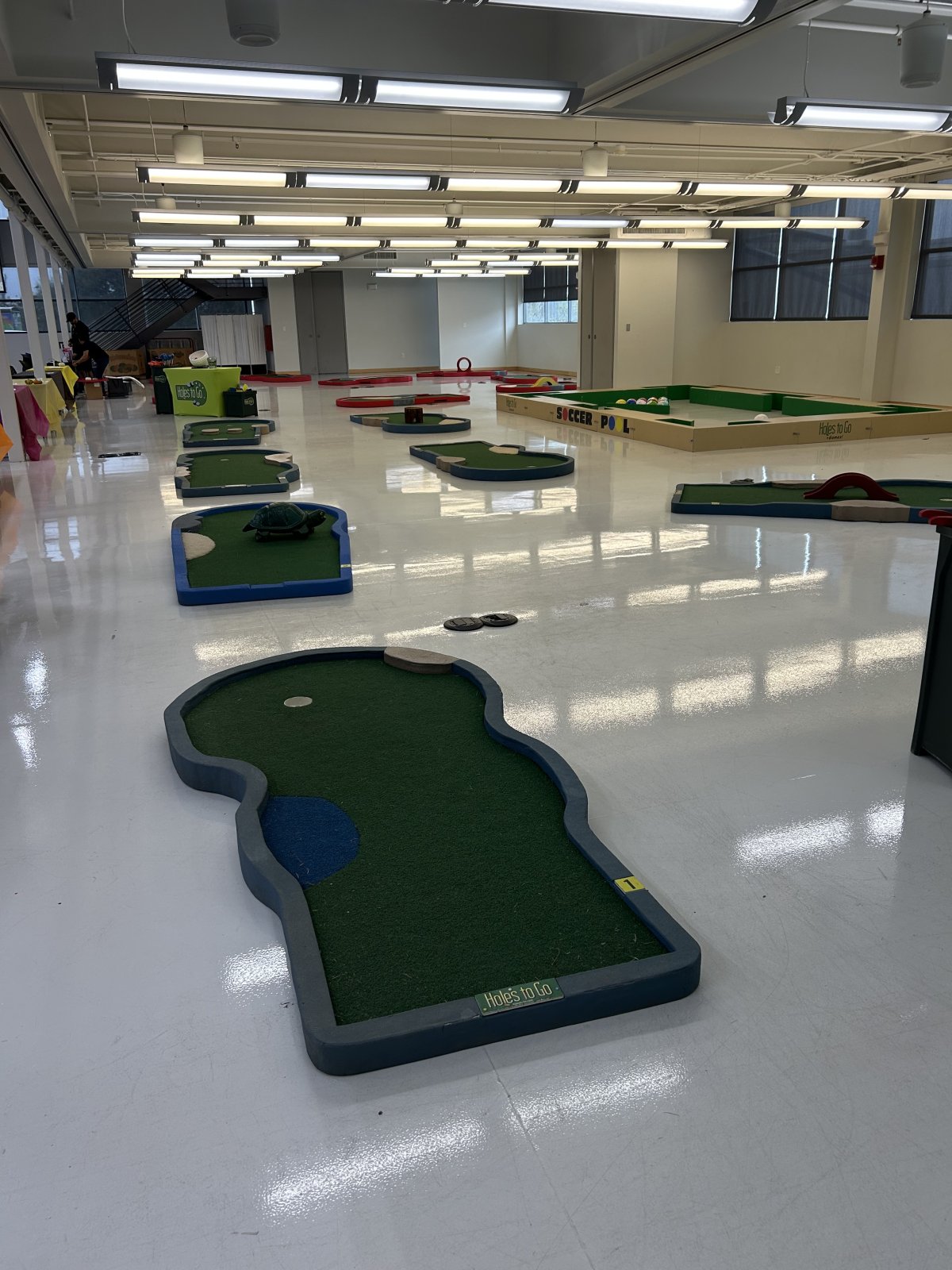
A portable 9-hole miniature golf course is an excellent centerpiece activity. It works for all ages and fitness levels, keeps people engaged throughout the day, and doesn’t require athletic ability. At Holes To Go, we’ve found that having one standout activity that everyone can enjoy together creates a natural gathering point and keeps energy high throughout the event.
Aim for 6-8 different activity stations. This gives people choices and keeps the day from feeling repetitive.
Watch OutAvoid activities that require specialized skills or create embarrassment. Games where people feel self-conscious will reduce participation, even if they’re physically capable of doing them.
Step 4: Plan Inclusive Team Building Activities for Large Groups
Mixing competitive and collaborative activities
The best company field day balances competition with collaboration. Pure competition can create tension. Pure collaboration can feel less engaging.
Mix these activity types:
- 50% competitive: Teams compete directly (relay races, tug-of-war, team sports)
- 30% collaborative: Teams work together toward a shared goal (scavenger hunts, puzzle challenges, group relay variations)
- 20% individual or low-pressure: People participate at their own pace (miniature golf, craft stations, trivia)
This balance keeps energy high without creating winners and losers all day long. People who don’t care about winning still feel included.
I M G 0791
Offering activities for different fitness levels and abilities
Not everyone can run a relay race. Not everyone wants to. Your job is to make sure nobody feels left out.
Offer multiple ways to participate in each activity:
- Relay races: Create a “support runner” role where people can cheer and pass batons without running the full distance
- Tug-of-war: Have multiple weight classes or strength levels so people compete fairly
- Obstacle courses: Make sections optional or allow modifications
- Miniature golf: Designed for all ages and abilities, no athletic skill required
- Trivia or games: Mental challenges for people who prefer strategy over physical activity
Make it clear that participation is optional. Some people will want to watch, cheer, and socialize. That’s fine. The goal is inclusion, not forcing everyone into the same mold.
Assign a “buddy” or “support role” for people who need mobility assistance. Let people sit out activities without judgment. Have shaded areas and seating for those who need breaks.
Key TakeawayThe most successful company field day is one where everyone, regardless of age, fitness level, or ability, feels like they belong and can contribute.
Step 5: Build Your Company Field Day Schedule
Creating a run-of-show timeline
A clear schedule keeps the day moving and prevents confusion. People know when to be where, and volunteers know what’s happening next.
Build a timeline that looks something like this:
- 8:30 AM: Arrival and check-in
- 9:00 AM: Welcome and team assignments
- 9:15 AM: Opening activity (icebreaker or team photo)
- 9:45 AM – 12:00 PM: Activity rotations (45 minutes each, with 15-minute breaks)
- 12:00 PM – 1:00 PM: Lunch break
- 1:00 PM – 3:00 PM: More activity rotations
- 3:00 PM – 3:30 PM: Awards ceremony and celebration
- 3:30 PM: Cleanup and departure
Print or display this schedule at the entrance and on any communication before the event. People feel less anxious when they know what to expect.
Managing activity rotations and breaks
With large groups, you can’t have everyone doing the same activity at once. Divide participants into groups and rotate them through stations.
Here’s how to manage it:
- Divide into 6-8 groups of equal size (if you have 80 people and 8 activity stations, that’s 10 people per group)
- Assign each group a starting station and a rotation order
- Use a timer or bell to signal when it’s time to rotate
- Have volunteers at each station to explain rules and keep things moving
- Build in 10-15 minute breaks between rotations so people can grab water, use restrooms, and recover
Breaks are essential. People get tired, thirsty, and need mental breaks. Without them, energy crashes by mid-afternoon.
Step 6: Handle Logistics, Safety, and Weather Contingencies
Logistics are the unglamorous but critical part of organizing a company field day. Small oversights create big problems.
Create a logistics checklist:
- Equipment: Confirm all games, balls, cones, and supplies are available and in working condition
- Setup and teardown: Arrange for volunteers or hire a service to handle heavy lifting
- Staffing: Recruit volunteers for registration, activity stations, first aid, and general troubleshooting
- Parking: Confirm adequate parking for all participants and vehicles
- Restrooms: Ensure clean, accessible facilities (rent portable restrooms if needed)
- Water and shade: Set up water stations every 50-75 feet and provide shaded areas
- First aid: Have a first aid kit and trained staff on-site
- Insurance: Confirm your company’s liability coverage or purchase event insurance
For weather, have a backup plan. If rain is in the forecast:
- Move indoor activities to a covered structure or gym
- Reschedule to a different date if the forecast is severe
- Have tents or tarps available to cover activity stations
- Adjust the schedule to account for wet ground or reduced visibility
Check the weather forecast 5-7 days before the event. Make a decision about contingencies at least 48 hours in advance so people have notice.
Step 7: Measure Outcomes and Gather Feedback
After the event, take time to measure what worked. This data helps you organize an even better company field day next year.
Send a short survey to participants within 24 hours:
- Did you enjoy the event? (1-5 scale)
- Which activities were your favorite?
- Which activities would you skip next time?
- Did you feel included and able to participate?
- Would you attend again?
- Any suggestions for next year?
Keep the survey to 5-7 questions. People won’t respond to a long form.
Track attendance and engagement. Note which activities had the longest lines and which were skipped. Did people actually use the miniature golf course? Did the relay races create good energy or feel too competitive?
Share results with your planning committee. Celebrate what went well. Identify 2-3 things to change next year.
Beyond surveys, watch for informal feedback. Talk to employees in the weeks after. What are they saying about the day? Are they talking about it positively? Did it actually strengthen team connections?
Best ForMeasuring outcomes works best when you have clear goals from Step 2. If your goal was cross-department connection, measure whether people from different departments actually interacted. If it was morale, track engagement survey scores before and after.
How to Organize Company Field Day: Common Mistakes to Avoid
Mistake 1: Too many competitive activities with no opt-out
People who don’t like competition or aren’t athletic feel left out. Balance competition with collaborative and low-pressure activities. Always offer alternatives.
Mistake 2: Unclear communication before the event
People don’t show up if they don’t know when and where. Send calendar invites, follow-up emails, and reminders.
Mistake 3: Underestimating setup and breakdown time
Setup always takes longer than you think.
Mistake 4: Not enough food, water, or shade
Dehydration, hunger, and heat exhaustion kill a company field day fast. Overestimate how much water you need. Provide snacks and lunch.
Mistake 5: Ignoring accessibility and inclusivity
People in wheelchairs, with mobility issues, or with chronic pain get left out if activities aren’t designed with them in mind.
Mistake 6: Scheduling activities back-to-back with no breaks
People burn out. Energy crashes. Build in 10-15 minute breaks between rotations.
Mistake 7: Picking activities that require specialized skills
Not everyone plays softball. Not everyone can do a cartwheel. Choose activities where everyone can participate, regardless of athletic background.
Organizing a company field day takes planning, but it doesn’t have to be complicated. Start early, delegate responsibilities, and focus on inclusion.
The best company field day is one where every employee feels welcome, has fun, and leaves with stronger connections to their team.
Frequently Asked Questions
How long should a company field day last?
Most company field days run 3 to 4 hours, though this depends on your group size and number of activities. A typical schedule includes a 15-minute kickoff, 2 to 2.5 hours of activity rotations with breaks, and 30 minutes for awards and closing remarks. Larger groups (50+ employees) may benefit from 4 hours to avoid long wait times between activities. Shorter events work well for smaller teams or when you have fewer stations available.
What are good inclusive team building activities for all fitness levels?
Mix low-impact and high-energy activities so everyone can participate. Include games like trivia contests, relay races with walking options, cornhole, giant Jenga, and skill-based challenges that don’t require running. Assign roles like scorekeepers or cheerleaders so employees who can’t compete actively still feel included. Portable entertainment options like miniature golf work well because they naturally accommodate all ages and abilities without requiring modifications.
How do you organize a company field day schedule so people don’t wait around?
Divide employees into rotating teams and assign each team a starting activity station. Set a timer (usually 10 to 15 minutes per station) and have teams rotate simultaneously to the next activity. This keeps everyone moving and engaged. For larger groups, run multiple instances of the same activity in parallel, or create a staggered schedule where some teams compete while others rest, eat, or participate in craft activities. A detailed run-of-show posted at the start prevents confusion.
What should I do if weather doesn’t cooperate on field day?
Have a backup plan ready before the event. Consider moving outdoor activities indoors if you have adequate space, or schedule field day during a season with more predictable weather. Many portable entertainment options, like miniature golf, can be set up indoors or under a tent. Communicate your weather policy to employees in advance so they know whether the event will be postponed, moved, or modified if rain occurs.